
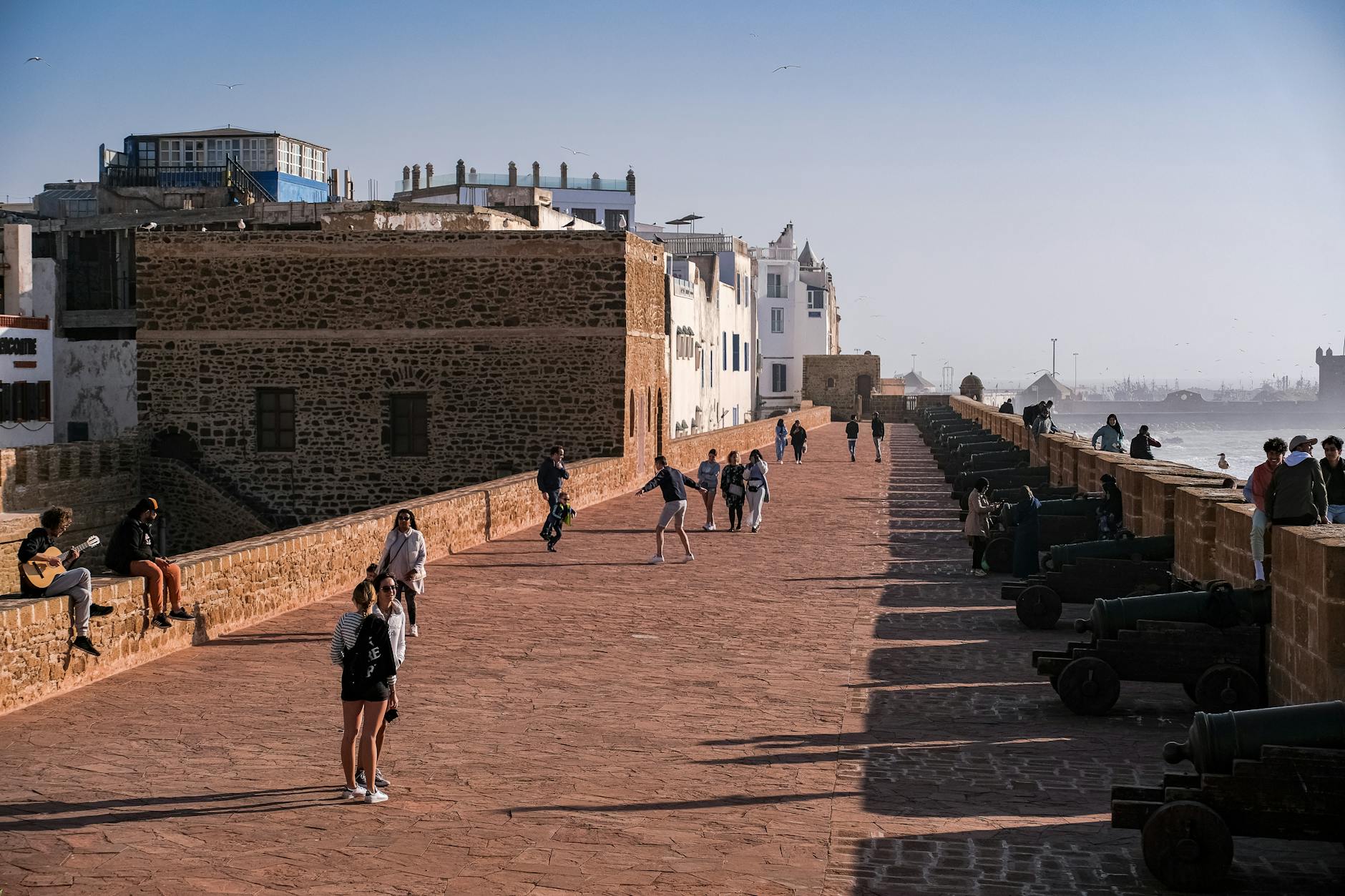
If you’ve been dreaming of learning to surf somewhere warm, affordable, and genuinely fun, Essaouira surfing should be at the top of your list. This laid-back Moroccan coastal town has quietly become one of the best beginner surf destinations in Africa — the waves are forgiving, the water is warm enough, lessons are cheap, and the surf culture is welcoming rather than exclusive. Whether you’ve never stood on a board or you’re an intermediate surfer looking for consistent Atlantic swells, this complete 2026 guide covers everything you need to know about surfing in Essaouira: where to go, what it costs, which surf schools are worth your money, and how to make the most of your time in the water.
Planning your budget? Check out our Essaouira Daily Budget & Real Costs Breakdown to see how surf lessons and rentals fit into the bigger picture.
Why Essaouira for Surfing?
Morocco has a massive coastline and dozens of famous surf spots, so why Essaouira specifically? Here’s what makes it stand out — especially for beginners and budget surfers.
- Consistent wind and waves year-round. Essaouira is known as the « Wind City of Africa » for good reason. The trade winds (alizee) blow reliably from April through September, making it a world-class windsurfing and kitesurfing destination. For surfing, the shoulder seasons and winter months deliver the best swells with lighter winds.
- Beginner-friendly breaks. The main beach in Essaouira has wide, sandy-bottom breaks with gentle whitewater — ideal for learning. No sharp reefs, no dangerous currents (in the main surf zones), and plenty of space.
- Seriously affordable. Surf lessons start from around €15 per session, and full-day board rental is as low as €5. Compare that to Bali, Portugal, or the Canaries and you’ll see why Morocco is a budget surfer’s paradise.
- The vibe. Essaouira is relaxed, colourful, and full of surf-minded travellers. After a session, you’re minutes from fresh seafood at the port, mint tea in the medina, or sunset on the ramparts. The town just works as a surf-trip base.
- Great side activities. When the wind is too strong for surfing (it happens), you can explore the medina, take a day trip to Sidi Kaouki, try kitesurfing, or simply chill. You won’t be bored on flat days. Check out our Essaouira Beach Guide for non-surf beach options.
Best Surf Spots in and Around Essaouira
Essaouira Main Beach (Plage d’Essaouira)
The long sandy beach stretching south from the medina is where most beginners start. The waves here are generally mellow — knee to waist-high whitewater that’s perfect for your first time standing up. The sandy bottom means wipeouts are soft, and there’s no reef to worry about. Most surf schools hold their lessons on the section of beach between the medina walls and the river mouth.
Best for: Complete beginners, first-timers, families
Wave type: Beach break, gentle whitewater, small to medium waves
Hazards: Minimal. Watch for the wind picking up in the afternoon.
Moulay Bouzerktoun
Located about 25 km north of Essaouira, « Moulay » is one of Morocco’s premier point breaks and a magnet for more experienced surfers. The right-hand point break produces long, clean waves when the swell is right. This is not a beginner spot — the waves are powerful and the rocks demand respect — but if you’ve progressed beyond the basics, it’s an incredible wave.
Best for: Intermediate to advanced surfers
Wave type: Right-hand point break over rocks
How to get there: Grand taxi (30–40 MAD / €2.70–€3.60 per seat) or rental car. Some surf schools include transport to Moulay in their packages.
Sidi Kaouki
This chilled-out beach village sits 25 km south of Essaouira and has become a destination in its own right. The beach break here is more exposed than Essaouira’s main beach, producing slightly bigger and more consistent waves. It’s a great stepping stone for beginners who’ve outgrown the gentle whitewater in town but aren’t ready for reef breaks. The village has its own surf camps, guesthouses, and a wonderfully sleepy atmosphere. For the full lowdown, read our Day Trip to Sidi Kaouki guide.
Best for: Beginner-intermediate surfers, surf camp retreats
Wave type: Beach break, more powerful than Essaouira main beach
How to get there: Grand taxi (20–30 MAD / €1.80–€2.70 per seat, 25 minutes), local bus (10 MAD / €0.90), or rental car.
Imsouane
About 90 km south of Essaouira, Imsouane is legendary for having one of the longest right-hand waves in Africa. The « Bay » section offers incredibly long, mellow rides that are fantastic for longboarders and improving surfers. The « Cathedral » section is a faster, more powerful point break for experienced riders. It’s too far for a casual day trip from Essaouira, but if you have a car or are willing to stay a couple of nights, it’s absolutely worth the detour.
Best for: Intermediate surfers (Bay), advanced surfers (Cathedral)
Wave type: Long right-hand point break (Bay), faster point break (Cathedral)
Diabat
Just south of the river mouth at the end of Essaouira’s main beach, Diabat is a small village with a beach break that picks up more swell than the sheltered main beach. When the main beach is too small, Diabat might have something rideable. A few surf schools use this area for lessons when conditions suit.
Best for: Beginners to intermediates looking for slightly bigger waves
How to get there: 20-minute walk along the beach from Essaouira or short taxi ride.
Best Time to Surf in Essaouira
Timing your trip right makes a big difference to your surf experience. Here’s the breakdown by season:
| Season | Months | Conditions | Best For |
|---|---|---|---|
| Winter | December–February | Biggest swells, offshore winds, water around 17°C | Intermediate to advanced surfers |
| Spring | March–May | Good swells, moderate wind, water 17–19°C | All levels — best overall period |
| Summer | June–August | Strong trade winds, smaller waves, water 19–21°C | Windsurfing/kitesurfing (surfing challenging due to wind) |
| Autumn | September–November | Wind calms down, swells return, water 19–21°C | All levels — excellent conditions |
The sweet spots for surfing are spring (March–May) and autumn (September–November). The swells are consistent, the wind is manageable, and the water is comfortable. Winter delivers the biggest waves but is mainly for experienced surfers. Summer is dominated by strong winds that chop up the waves — great for kitesurfing, less ideal for wave surfing, though early mornings before the wind kicks in can still work for beginners.
Water Temperature and What to Wear
- Winter (Dec–Feb): 16–18°C. You’ll want a 4/3mm wetsuit and possibly booties.
- Spring/Autumn: 17–21°C. A 3/2mm wetsuit is comfortable.
- Summer (Jun–Aug): 19–22°C. A 3/2mm or shorty wetsuit works. Some people get away with a rash guard on warm days, but the Atlantic current keeps it cooler than you’d expect.
Surf Schools in Essaouira: Comparison Guide
There are plenty of surf schools operating in Essaouira and Sidi Kaouki, ranging from small one-person operations to established schools with multiple instructors. Here’s a comparison of the main options in 2026.
What a Typical Surf Lesson Includes
Most surf schools in Essaouira offer a similar package for a standard group lesson:
- 2-hour session (roughly 30 minutes of beach instruction, 90 minutes in the water)
- Softboard (foam board) and wetsuit included
- Groups of 4–8 students per instructor
- Beach warm-up, pop-up technique on sand, then into the water
- Insurance included (at reputable schools)
Surf School Price Comparison
| Surf School | Location | Group Lesson (2h) | Private Lesson (2h) | Multi-Day Package |
|---|---|---|---|---|
| Essaouira Surf Schools (various) | Main beach | 150–200 MAD (€14–€18) | 350–500 MAD (€32–€45) | 3 days: 400–550 MAD (€36–€50) |
| Explora Watersports | Main beach | 200 MAD (€18) | 450 MAD (€41) | 5 days: 850 MAD (€77) |
| Surf camps (Sidi Kaouki) | Sidi Kaouki | 180–250 MAD (€16–€23) | 400–550 MAD (€36–€50) | Week package (lessons + accommodation): 2,500–4,000 MAD (€227–€364) |
| ION Club | Main beach | 250 MAD (€23) | 500 MAD (€45) | 3 days: 650 MAD (€59) |
Budget tip: Multi-day packages always offer better value per lesson. If you know you want to surf for several days, book a package upfront rather than paying per session. Some schools offer discounts if you book directly rather than through a tour platform. book a surf lesson on GetYourGuide
How to Choose a Surf School
- Ask about instructor qualifications. ISA (International Surfing Association) certified instructors are the gold standard. Most established schools in Essaouira have certified staff.
- Check the group size. Smaller is better. 4–6 students per instructor means more attention for you. If a school packs 10+ students per instructor, look elsewhere.
- Read recent reviews. Staff changes frequently at surf schools. Check reviews from the current season, not from two years ago.
- Equipment quality matters. Softboards (foam) should be in good condition, not cracked or delaminated. Wetsuits should not smell like a crime scene. Good schools replace gear regularly.
- Photos and videos. Some schools include photos or video analysis of your session — great for learning and for the ‘gram. Ask if this is included.
Board and Gear Rental
If you already know the basics and just want to rent gear, here’s what you’ll pay in Essaouira:
| Rental Item | Half Day (MAD) | Half Day (EUR) | Full Day (MAD) | Full Day (EUR) |
|---|---|---|---|---|
| Softboard (foam) | 50–80 | €4.50–€7.30 | 80–120 | €7.30–€10.90 |
| Hardboard (fibreglass) | 80–120 | €7.30–€10.90 | 120–180 | €10.90–€16.40 |
| Wetsuit only | 30–50 | €2.70–€4.50 | 50–80 | €4.50–€7.30 |
| Board + wetsuit combo | 70–100 | €6.40–€9.10 | 100–160 | €9.10–€14.50 |
Weekly rentals offer significant savings — expect to pay around 400–600 MAD (€36–€55) for a full week of board and wetsuit rental. Rental shops are clustered near the beach entrance and along the road to Diabat. Some hostels also have boards available for guests, sometimes free of charge.
Surf Camps and Multi-Day Packages
If surfing is the main purpose of your trip, a surf camp can be excellent value. These typically include accommodation, daily lessons, equipment, and sometimes meals — all bundled at a lower price than booking separately.
What to Expect from a Surf Camp
- Duration: Most camps run for 5 or 7 days
- Accommodation: Usually shared rooms in a surf house or guesthouse
- Lessons: Daily 2-hour sessions, sometimes with video review
- Meals: Breakfast usually included, some camps offer half or full board
- Extras: Yoga sessions, day trips, cultural activities
Typical Surf Camp Prices
- Budget surf camp (Essaouira): 2,000–3,000 MAD (€182–€273) per week, shared room, breakfast, daily lessons
- Mid-range surf camp (Sidi Kaouki): 3,000–5,000 MAD (€273–€455) per week, private or shared room, half board, daily lessons, yoga
- Premium surf retreat: 5,000–8,000 MAD (€455–€727) per week, private room, full board, private lessons, excursions
Sidi Kaouki has a stronger concentration of surf camps than Essaouira itself, and the waves are generally better for learning. The trade-off is that you’re in a small village rather than a town — less to do off the water, but that can be exactly the point. https://www.getyourguide.com/essaouira-l877/essaouira-surf-lessons-t687850/?partner_id=YX5LC4D&utm_medium=online_publisher&utm_source=essaouirabudgetguide
Beginner Surf Tips for Essaouira
First time in the water? Here are some practical tips specific to surfing in Essaouira:
- Start with a lesson, not a rental. Even if you’ve watched a hundred YouTube videos, a proper lesson with an instructor will save you days of frustration. The pop-up technique is much harder than it looks, and an instructor will correct your mistakes in real time.
- Surf in the morning. Essaouira’s trade winds typically pick up after midday, especially in spring and summer. The morning hours (8am–12pm) usually have the calmest, cleanest conditions. Afternoons can get very windy and choppy.
- Wear sunscreen, even on cloudy days. The Atlantic reflection is brutal. Use reef-safe, zinc-based sunscreen and reapply before every session. Your face, ears, and the backs of your hands will thank you.
- Respect the current. The main beach in Essaouira is generally safe, but pay attention to any currents, especially near the river mouth. If you feel yourself being pulled, don’t panic — swim parallel to the shore until you’re out of it, then head in.
- Stay on the softboard longer than you think you need to. Many beginners rush to switch to a hardboard. Stick with the foam board for at least your first 5–10 sessions. It’s more forgiving, more buoyant, and safer for you and everyone around you.
- Don’t drop in on other surfers. Even as a beginner, learn the basic right-of-way rules. The surfer closest to the breaking part of the wave has priority. Dropping in on someone is the quickest way to make enemies in the water.
- Stay hydrated. Surfing is more physically demanding than it looks. Bring water and drink between sessions. The combination of saltwater, wind, and sun will dehydrate you faster than you expect.
- Book a few days, not one. One lesson will get you standing up (maybe). Three to five lessons will give you a genuine foundation. Most people start catching unbroken waves by day 3 or 4. The learning curve is steep at first but hugely rewarding.
Beyond Surfing: Other Water Sports in Essaouira
If the wind is too strong for surfing (a common summer scenario), Essaouira has excellent options for other water sports:
- Windsurfing: Essaouira is a world-class windsurfing destination. Rental and lessons available from 300–500 MAD (€27–€45) per session.
- Kitesurfing: The consistent trade winds make Essaouira ideal for kitesurfing, particularly from June to September. Beginner courses run about 1,500–2,500 MAD (€136–€227) for a multi-day introduction.
- Stand-up paddleboarding (SUP): Available on calmer days. Rental from 100–150 MAD (€9.10–€13.60) per hour.
- Bodyboarding: A great alternative when waves are too messy for surfing. Board rental from 50 MAD (€4.50) per day.
What to Bring for a Surf Trip to Essaouira
- Reef-safe sunscreen (SPF 50+ zinc-based)
- Rash guard / surf top (prevents wetsuit chafing and adds sun protection)
- Quick-dry towel
- Flip-flops / sandals (the beach sand gets hot)
- Waterproof phone case (if you want photos/video from the beach)
- Ear plugs (surfer’s ear is real, especially in cooler water)
- Your own wetsuit (optional — rental suits can be worn but bringing your own guarantees fit and hygiene)
- Sense of humour (you will fall. A lot. Embrace it.)
You don’t need to bring a board — rental boards are cheap and available everywhere. Unless you’re an advanced surfer with a specific board preference, renting is the way to go.
Looking for budget-specific surf tips? Our Surfing in Essaouira on a Budget guide covers the cheapest lessons, board rental deals, and free surf spots. You might also want to check out Sidi Kaouki — a quieter surf beach just 25km south.
Best Surf Schools in Essaouira (With Real Prices)
Here are the most reputable surf schools operating in Essaouira and Sidi Kaouki in 2026:
| Surf School | Location | Group Lesson | Private Lesson | Board Rental |
|---|---|---|---|---|
| Surf Twins Essaouira | Essaouira & Sidi Kaouki | From €30 | From €45–€80 | €10–15/day |
| Explora Watersports | Essaouira Beach | From €35 | From €50 | €12/day |
| Loving Surf Essaouira | Essaouira Beach | From €30 | From €45 | €10/day |
All schools include equipment (board + wetsuit) and most offer free board rental after your lesson. Group sizes are typically capped at 5 students per instructor. Surf camps (1 week with accommodation) start from €350–€400.
Frequently Asked Questions
Is Essaouira good for beginner surfers?
Yes, Essaouira is one of the best places in Morocco for beginner surfers. The main beach has gentle, sandy-bottom waves that are perfect for learning. Multiple surf schools offer affordable lessons with qualified instructors, and the relaxed atmosphere makes it a great place to start your surfing journey.
What is the best time of year to surf in Essaouira?
Spring (March–May) and autumn (September–November) offer the best balance of good swells and manageable wind. Winter has the biggest waves but is better for experienced surfers. Summer is dominated by strong trade winds that make wave surfing challenging, though early mornings can still work.
How much do surf lessons cost in Essaouira?
A 2-hour group surf lesson costs 150–250 MAD (€14–€23). Private lessons run 350–500 MAD (€32–€45) for 2 hours. Multi-day packages offer better value, with 3-day packages starting from about 400 MAD (€36). Full surf camp weeks with accommodation start from around 2,000 MAD (€182).
Can I surf in Essaouira in summer?
Summer surfing in Essaouira is possible but challenging due to the strong trade winds that blow most afternoons. Your best bet is to surf in the early morning (before 11am) when the wind is usually light. Alternatively, use the wind to your advantage and try windsurfing or kitesurfing instead.
Do I need to bring my own wetsuit?
No, all surf schools and rental shops provide wetsuits. However, rental wetsuits vary in quality and hygiene. If you plan to surf for a week or more, bringing your own 3/2mm wetsuit is worth considering for comfort and fit. A rash guard to wear underneath is always a good idea.
Is Sidi Kaouki better than Essaouira for surfing?
Sidi Kaouki generally has more consistent and slightly bigger waves than the main Essaouira beach, making it better for surfers who have already mastered the basics. For complete beginners, Essaouira’s main beach is more sheltered and easier to learn on. Many surfers split their time between both spots — learning in Essaouira and progressing in Sidi Kaouki.
Are there dangerous currents or marine life to worry about?
The main beach in Essaouira is generally safe with no significant currents in the main surf zone. There are no dangerous marine animals to worry about — no sharks, jellyfish, or sea urchins in the sandy beach breaks. The only real hazard is the wind, which can change conditions rapidly, and the river mouth area where currents can be stronger. Always surf with others and listen to local advice.
Can I rent a surfboard without taking a lesson?
Yes, board and wetsuit rental is available independently from surf schools and beach rental shops. A softboard rents for 80–120 MAD (€7.30–€10.90) per full day, and a wetsuit for 50–80 MAD (€4.50–€7.30) per day. No experience proof is required, but if you’ve never surfed before, a lesson is strongly recommended.