

The Essaouira fish market is one of those experiences that every visitor talks about — and for good reason. You pick your own fish, hand it to a grill cook, and minutes later you’re eating the freshest seafood of your life at a communal table, surrounded by the sights and smells of a working fishing port. The best part? You can eat a full seafood meal — grilled fish, shrimp, calamari, bread, and salad — for under €5 (55 MAD) if you know what you’re doing. This guide walks you through exactly how the fish market works, step by step, so you get a great meal without overpaying.
For more budget-friendly food options, check out our guide to the best cheap eats in Essaouira and our Essaouira street food guide.
Where Is the Essaouira Fish Market?
The fish market sits at the edge of the fishing port, just south of Place Moulay Hassan (the main square). It’s impossible to miss — look for the cluster of blue fishing boats, the smell of charcoal grills, and the groups of tourists looking slightly overwhelmed. The market is divided into two areas:
- The fish stalls (marché aux poissons): Where fishermen and vendors sell raw, fresh-caught fish. This is where you buy your seafood.
- The grill area: Rows of open-air grills with communal tables where your purchased fish gets cooked and served. This is where you eat.
The market is open daily from around 8am to 5pm, with the best selection in the morning between 9am and 1pm, when the boats come in with the day’s catch. The grill area stays active until the last fish is cooked.
How the Fish Market Works: Step-by-Step Guide
First-timers often feel confused by the process, but it’s actually straightforward once you understand how it flows. Here’s exactly what to do:
Step 1: Browse the Fish Stalls
Walk through the fish stalls first and look at what’s available. You’ll see sardines, sole, sea bream, sea bass, shrimp, calamari, lobster, crab, and whatever else came in that morning. Don’t commit to buying at the first stall — walk the whole row to see what looks freshest and compare prices. Fresh fish has clear eyes, bright red gills, and doesn’t smell overly fishy.
Step 2: Choose Your Seafood and Negotiate
Point at what you want. The vendor will weigh it and quote a price. This is where negotiation happens. Vendors typically start with an inflated tourist price — sometimes double or triple the real price. Don’t panic. Here are fair prices for 2026:
| Seafood | Fair Price (MAD/kg) | Fair Price (EUR/kg) | What You’ll Actually Eat |
|---|---|---|---|
| Sardines | 15–25 MAD/kg | €1.40–€2.30/kg | ~250g per person |
| Shrimp | 60–100 MAD/kg | €5.50–€9.10/kg | ~200g per person |
| Calamari | 40–70 MAD/kg | €3.60–€6.40/kg | ~200g per person |
| Sea bream / sole | 50–80 MAD/kg | €4.55–€7.30/kg | 1 fish per person |
| Lobster | 150–250 MAD/kg | €13.60–€22.70/kg | Splurge item |
Pro tip: For a budget meal for one person, grab 250g of sardines and a handful of shrimp. Total cost for the raw fish: around 20-30 MAD (€1.80-€2.70).
Step 3: Take Your Fish to the Grill Area
Once you’ve bought your seafood, carry it over to the grill area. There are usually 15-20 grill stations, each with a cook and communal tables. Any of them will grill your fish — they’re all using the same charcoal and roughly the same technique.
The grill cook will charge a cooking fee of 10-20 MAD (€0.90-€1.80) per plate, which includes grilling, bread, a basic salad (tomatoes, onions, olives), and harissa or chermoula sauce. Some cooks try to charge more — agree on the price before handing over your fish.
Step 4: Sit Down and Wait
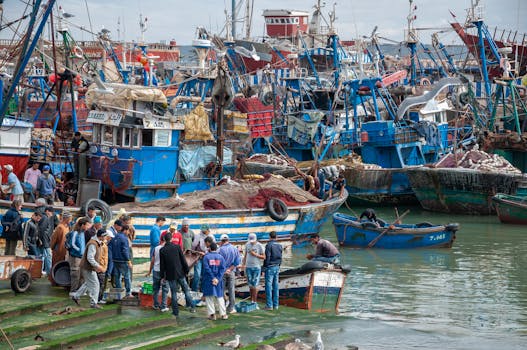
Grab a seat at the communal tables. Your fish will be seasoned with salt, cumin, and usually chermoula, then grilled over charcoal. It takes about 10-15 minutes depending on what you ordered. You’ll be given bread, a simple salad, and usually a small dish of olives while you wait. Some grill areas offer drinks — mint tea, water, or soft drinks — for a few extra dirhams.
Step 5: Eat and Enjoy
Your fish arrives on a plate, still sizzling. Squeeze on some lemon, tear off some bread, and dig in. Eat with your hands — everyone does. This is genuinely some of the freshest, most flavourful seafood you’ll eat anywhere, and the fact that you’re eating it at a communal table next to fishermen and fellow travelers makes it unforgettable.
What to Order at the Fish Market (Budget-Friendly Picks)
If you’re watching your budget, here’s what to go for:
- Sardines: The cheapest and most quintessentially Essaouira option. Fresh-grilled sardines here are incredible, and they cost almost nothing.
- Calamari: Slightly more expensive but grills beautifully and is very filling. A great mid-range option.
- Mixed plate: Ask the fish vendor for a small mixed plate — a couple of sardines, some shrimp, and a piece of calamari. Most vendors are happy to put together a small selection for 30-40 MAD (€2.70-€3.60).
Skip the lobster if you’re on a strict budget — it’s the most expensive item and not dramatically better than the cheaper options in terms of the grilling experience. Also skip anything you don’t see other people buying — if a fish has been sitting on the stall for a while with no takers, there’s usually a reason.
Sample Budget Meal: The €5 Fish Market Feast
Here’s a realistic breakdown for one person eating well at the fish market:
| Item | Cost (MAD) | Cost (EUR) |
|---|---|---|
| 250g sardines | 5–8 MAD | €0.45–€0.70 |
| 200g shrimp | 15–20 MAD | €1.40–€1.80 |
| Grilling fee (incl. bread & salad) | 15–20 MAD | €1.40–€1.80 |
| Bottle of water | 5 MAD | €0.45 |
| Total | 40–53 MAD | €3.60–€4.80 |
Under €5 for fresh-grilled sardines and shrimp at a working fishing port. Try finding that in southern Europe.
Tips to Avoid Scams & Overpaying
The fish market is honest and straightforward for the most part, but there are a few tactics to watch out for:
The Inflated First Price
Vendors will almost always quote a higher price to tourists. This isn’t a scam — it’s just how markets work in Morocco. Counter with about 50-60% of the quoted price and negotiate from there. If a vendor won’t budge to a reasonable price, simply walk to the next stall. There are plenty of vendors and they all sell similar fish.
The « Wrong Weight » Trick
Some vendors will weigh your fish on a scale that’s not zeroed properly, or add extra fish you didn’t ask for. Watch the scale closely, and make sure it starts at zero before your fish goes on. If you’re not comfortable with the weighing process, agree on a flat price per plate rather than per kilo.
The Surprise Lobster
Occasionally a vendor or grill cook will add a piece of lobster or an expensive fish to your plate without asking, then charge you extra. Be clear about what you want before anything goes on the grill, and confirm the total price before they start cooking.
The Aggressive Grill Touts
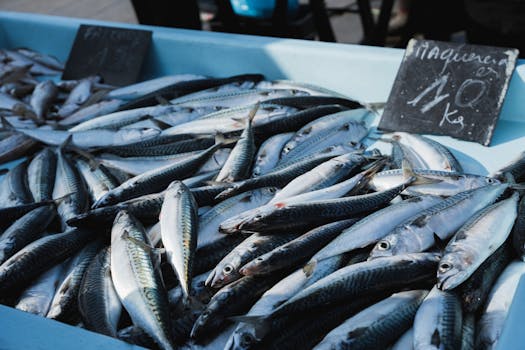
As you walk from the fish stalls to the grill area, you’ll be approached by people trying to steer you to their specific grill station. This is annoying but harmless — they get a small commission. It’s fine to follow them if the grill looks good, but don’t feel pressured. You can walk to any grill station you want.
The Hidden Extras
Some grill stations charge extra for bread, salad, or sauce that should be included in the grilling fee. Before sitting down, confirm exactly what’s included in the cooking price. A fair grilling fee of 15-20 MAD should include bread, basic salad, and sauce.
When to Go
The best time to visit the fish market is late morning, between 10am and 1pm. That’s when the fishing boats have just come in and the selection is widest and freshest. The grill area starts getting busy around 11:30am and peaks around 12:30-1:30pm. If you want a more relaxed experience with less crowd, go on a weekday rather than a weekend.
Avoid late afternoon — by 3-4pm, the best fish is gone and what remains has been sitting in the sun for hours. Friday afternoons are quieter as many vendors take the afternoon off for prayers.
Practical Tips
- Bring cash: No cards accepted anywhere in the fish market. Small bills (10 and 20 MAD) are ideal.
- Bring hand sanitizer: You’ll eat with your hands, and washing facilities are basic.
- Wear clothes you don’t mind getting fishy: The smell lingers. This isn’t the day for your nice outfit.
- Bring your own water: Cheaper than buying it at the grill area, where prices are marked up.
- Don’t be shy: Point, gesture, smile. Even if you don’t speak French or Arabic, the vendors are used to tourists and the transaction is visual.
- Go with a friend: Buying for two people lets you order a wider variety without the cost getting too high, and you can split a mixed plate.
🎯 Book Budget Activities on Viator:
- Camel, Quad & Buggy Combo — from $22
- 1-Hour Camel Ride — from $24
- Bread & Msemen Workshop — from $31
- Moroccan Cooking Class — from $41
- Horse Ride on the Beach — from $41
Is the Essaouira fish market safe to eat at?
Yes. The fish is caught that morning and grilled to order over high-heat charcoal, which kills any bacteria. Millions of tourists and locals eat here every year with no issues. The main risk is choosing fish that’s been sitting out too long — stick to the busy stalls with high turnover, go before 2pm, and you’ll be fine. For more general safety info, read our Essaouira safety guide.
Can I eat at the fish market if I’m squeamish about raw fish?
The raw fish part only lasts a minute — you point at what you want, someone else handles the rest, and it comes to you fully cooked. You never need to touch the raw fish yourself. If the market atmosphere feels too intense, the street food stalls near the port offer pre-selected grilled fish plates without the whole buy-it-yourself process.
How much should I budget for the fish market?
A basic meal of sardines with the grilling fee comes to about 25-35 MAD (€2.30-€3.20). A more generous meal with mixed seafood runs 50-80 MAD (€4.55-€7.30). Even if you go all out with sea bream and shrimp, you’d struggle to spend more than 100 MAD (€9.10) per person. For daily budget context, see our full budget breakdown.
Is the fish market open every day?
The fish stalls are open daily, though the selection can be smaller on Fridays and Sundays. The grill area operates every day as long as there’s fish to cook. During Ramadan, the grill area may have reduced hours during the day but gets busy at sunset when people break their fast.
Can I visit the fish market as a vegetarian?
You can visit for the atmosphere — the fishing port and market are interesting even if you don’t eat seafood. But there’s nothing vegetarian to eat at the fish market itself. For plant-based options, head to the restaurants and cafes in the medina instead.
Make the fish market part of your Essaouira itinerary. Check out our 3-Day Essaouira Itinerary for the perfect budget trip plan, or read our self-guided medina walking tour to explore the rest of the old town after lunch.